
John David Norman
18 min read
John David Norman has been described by investigators as "the pedophile of pedophiles." While this title may sound exaggerated, a closer look reveals the extent of his operations: he built a sprawling interstate child sexual exploitation network that trafficked boys across dozens of states and sometimes internationally. This network maintained tens of thousands of client records. It repeatedly evaded detection due to indifference, judicial failures, and the deliberate destruction of evidence. What makes Norman especially disturbing is not just the scale of his crimes, but the company he appears to have kept. His trajectory overlaps, directly and indirectly, with two of the most notorious serial killers in American history: Dean Corll and John Wayne Gacy.
In my research for this case, I relied heavily on numerous newspaper articles, court records, archival reports, and the investigative work showcased in the podcast "The Clown and the Candyman". Together, these sources uncover a disturbingly familiar pattern. In recent years, the Jeffrey Epstein case has forced the public to confront an unsettling reality. Large-scale sexual exploitation networks— protected by wealth, influence, and institutional neglect, are not anomalies. They are recurring features of American history. Long before Epstein, names like John David Norman reveal how deeply embedded these systems were, and how often warnings were ignored. This is not just the story of one man, but of a pattern—one that stretches across decades, jurisdictions, and victims whose names were too often lost, erased, or deliberately destroyed.
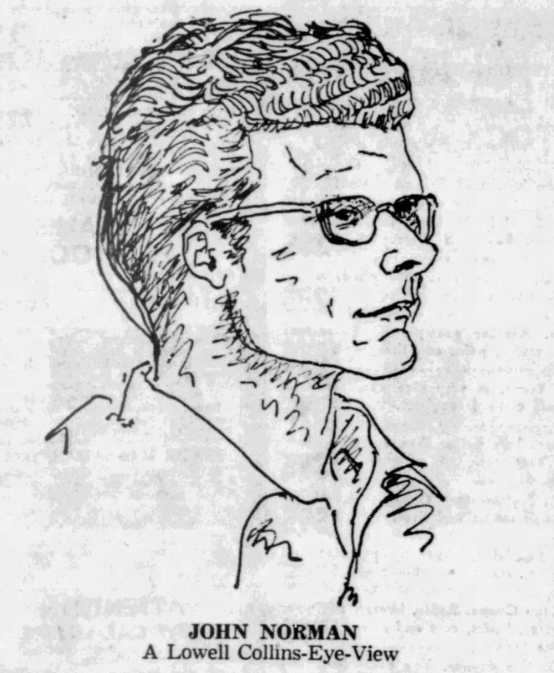
John David Norman
Source: The Houston Post
Intro
On August 13, 1973, the Dallas Police Department received a memo from the FBI indicating that they had spoken with 21-year-old Charles Brisendine. Brisendine had been invited to Dallas as a "fellow" by a "sponsor" of the Odyssey Foundation. His sponsor introduced himself as Alan Hitchcock. After they had a sexual encounter, Hitchcock began explaining his operation to Brisendine, but Brisendine felt that something was off. Later that night, while browsing through some of the Odyssey's literature in Hitchcock's apartment, Brisendine noticed that several of the "fellows" were missing. Alarmingly, the word "kill" was highlighted in orange across four of the pictures.
In the preceding weeks, headlines had reported that investigators had unearthed 29 bodies in Houston linked to the serial killer Dean Corll and his two accomplices, David Owen Brooks and Elmer Wayne Henley. Henley had informed investigators that Dean Corll was part of a pornographic network based in Dallas that sold boys. Concerned that the pictures he had seen could involve the same boys connected to the Houston Mass Murders, Brisendine reached out to the gay newspaper, Advocate, in Los Angeles for advice. He was subsequently connected with Advocate's Dallas correspondent, Rob Shivers, who advised him to contact the FBI.
The FBI stated that the term "kill" was an old printer's term meaning that the information was no longer to be used. They suggested that the four individuals in question were no longer part of the porn ring, but this did not necessarily imply that they were marked for death. Captain Bennie Newsome mentioned that they had questioned Brooks and Henley regarding the Dallas-based operations, Epic International, and the Odyssey Foundation. However, neither was found to be connected to any activities in Dallas, and there were no links between Norman and Corll. It was not surprising that they did not want to investigate further, as the Houston Police Department (HPD) was already overwhelmed with their own cases. They were still in the process of identifying 29 bodies.
During a routine investigation in 1975, the HPD uncovered files in a warehouse, which included eleven pictures of victims from the Houston Mass Murders, many of whom had disappeared from the Houston Heights area, where Corll's victims were found. This led to further speculation that a larger organization might be involved. However, the HPD decided not to pursue the investigation, stating that the families of Corll's victims had already suffered enough.
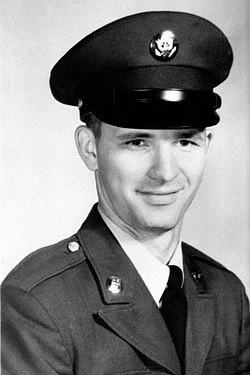
Dean Corll
Source: Houston Chronicle
Childhood
John David Norman was born on October 13, 1927, in Ada, Oklahoma to Earl and Nell Norman. An article about him published in 1939 by the Ada Evening News, when John was just eleven, praised his accomplishments. It highlighted him as a top-performing student, a talented pianist, and a Cub Scout who loved the outdoors. The article emphasized that Norman's parents should take great pride in having him as their child. He attended Horace Mann Grade School and then went on to Ada Junior High School.
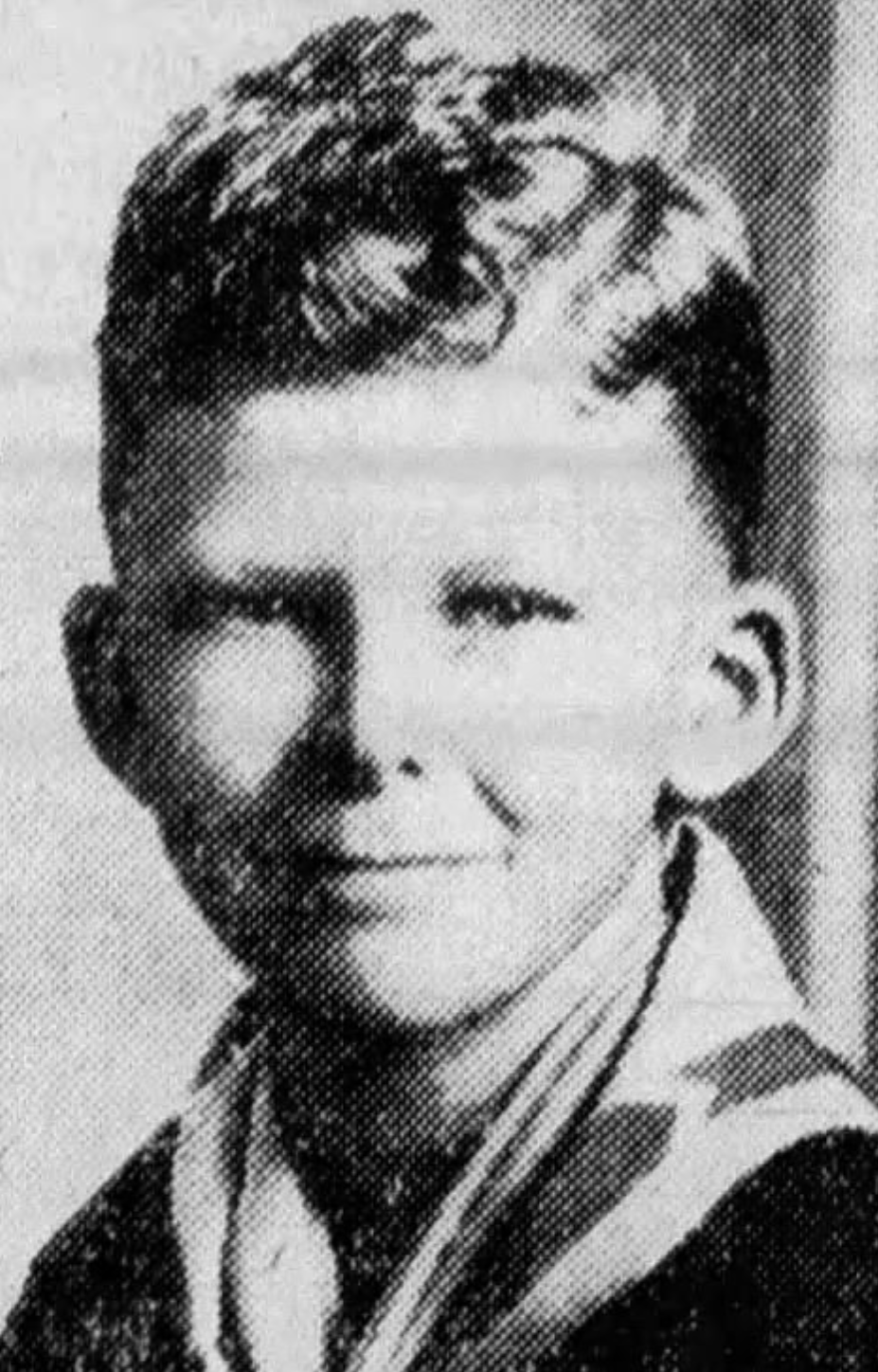
John David Norman
Source: The Ada Evening News
In June 1943, when he was 16, Norman moved with his family to Houston. There, he began working at KTRH as a control operator. He gained enough experience in the radio industry to decide that he wanted to become a producer. While attending Lamar High School, he was an active member of the student council and the National Honor Society during his junior year. His achievements led to a scholarship from the Houston Committee for Constitutional Government, allowing him to enroll at Northwestern University in Evanston, Illinois, in the School of Speech. Norman believed this program offered the best course in radio production. His previous experience at KTRH helped him excel in his studies, and he received the Edgar Bergen scholarship in radio.
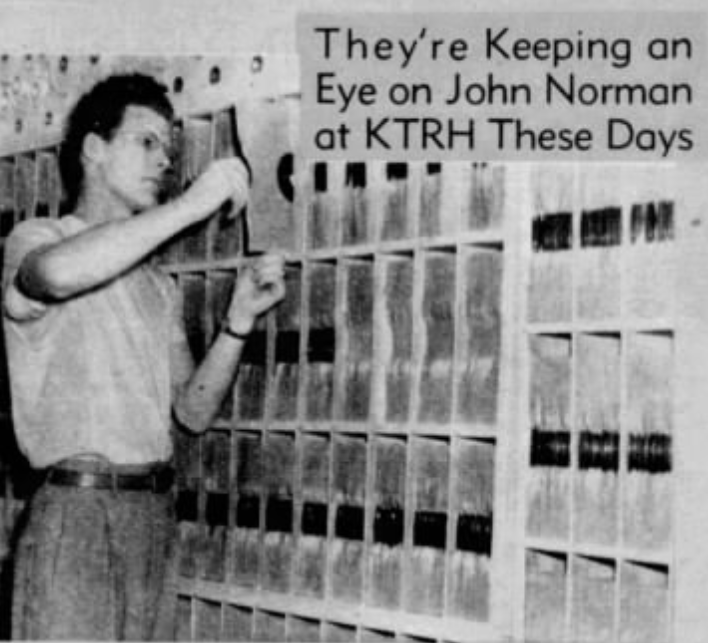
John David Norman
Source: Houston Chronicle
In the summer of 1946, upon his return to Houston, he approached KTRH with the idea for an "Experiment in Radio." He was convinced that Houston had enough talent to support a radio drama workshop. KTRH was pleased to welcome back their bright employee from Chicago, and he had become the youngest radio engineer at KTRH. During his time there from 1946 to 1950, Norman wrote, directed, and sometimes starred in plays. In addition to his work in radio drama, Norman wrote and composed over 400 jingles for commercials, with each jingle lasting between seven and twenty seconds. He noted that the seven-second jingles were the most challenging to write, and he often spent anywhere from five minutes to five days perfecting them. His first advertising tune was for a dandruff remover, and he earned between $100 and $1,500 for his jingles. As an example of his creative flair, he wrote a jingle for fun to the tune of "East Side, West Side," which went:
"Money, money;
Mazooma, moolah, dough.
There is nothing else like it,
To keep you from being po'."
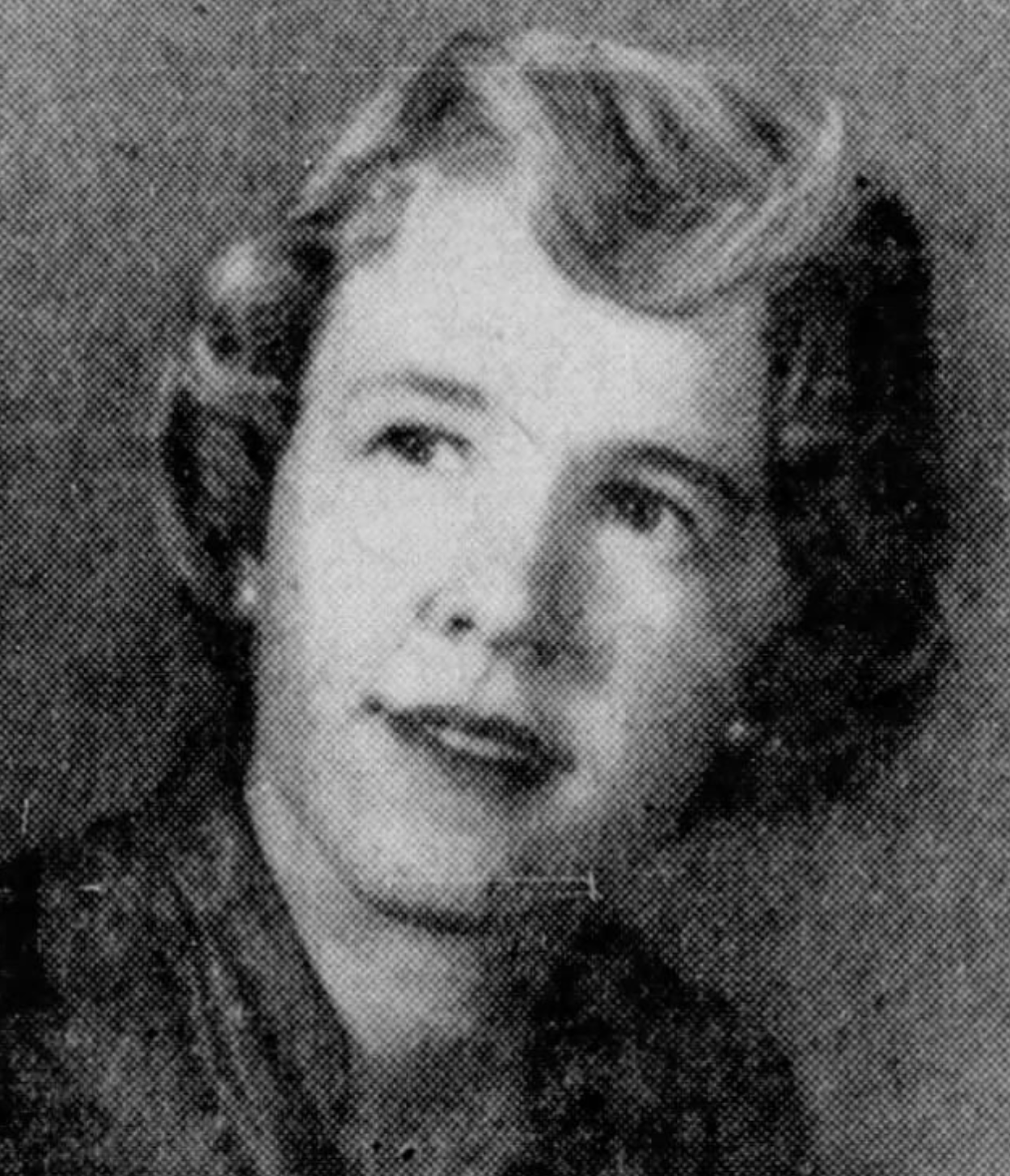
Additionally, a newspaper marriage announcement indicated that Barbara Jean Lonsford was set to marry John David Norman on February 23, 1952, at the Second Baptist Church in Houston. Aside from this brief mention, Lonsford disappears from the historical record, with no further documentation tying her to Norman or clarifying whether the marriage ever took place.
Barbara Lonsford
Source: Houston Chronicle
First Crimes
John Norman's first offenses occurred on May 20, 1954, and July 13, 1956. He was arrested twice in Houston for molesting a minor. A business certificate was filed on December 10, 1957, indicating that John Norman was living at 6041 Carlton Way, Hollywood, California. He operated a recording business at P.O. Box 1304, Palm Springs, California, under the fictitious name Desert Records. Norman's Desert Records LLC was mentioned in several issues of an old magazine called "Harry Oliver's Desert Rat Scrap Book."
On April 8, 1960, Norman was arrested in Santa Ana, California. At that time, he was the editor of the Santa Ana Industrial Publication magazine. He faced one count of child molestation and three counts of perversion involving three pre-teen boys. Following his arrest, Norman was released on $2,625 bail and placed on two years of probation after undergoing mental observation at Atascadero State Hospital. He was declared a sexual psychopath who could not benefit from treatment. Norman admitted to engaging in lewd acts with teenage boys aged 13 to 15 at his apartment located at 1006 N French St in Santa Ana. In 1970, he was arrested for sending obscene literature through the mail. On October 19, he received a 15-month sentence and served time at McNeil Island Federal Penitentiary in Washington.
Odyssey Foundation
On August 13, 1973, the FBI tipped off the police, leading to a raid on Norman's apartment at 3716 Cole Ave the following day. During the raid, authorities discovered various items, including sex literature, photoengraving equipment, a camera, stationery, typewriters, and hundreds of booklets containing pictures of young boys. They also found 30,000 index cards with names and addresses of 50,000 to 100,000 clients from across 35 states.
The investigation revealed that Norman had been operating in San Diego for several years under the names Norman Foundation, Odyssey Foundation, and Epic International. All these groups presented themselves as support organizations for bright young men eager to learn through travel. Sponsors, chosen from a master list of over 50,000 prospects, were invited to join for an enrollment fee of $15. For an additional $3, they received a booklet titled "Fellows 1973," which contained photos, names, physical descriptions, and interests of numerous available boys. For $20 to $40 a day, plus airfare, a sponsor could meet any of the young men.
Young men were often recruited for Norman's organization through ads in gay publications or by direct solicitation from the Greyhound and Trailways bus stop, a well-known area for runaway teens. These boys and young men were referred to as "fellows." They were photographed for pamphlets and booklets and subsequently trafficked to clients known as sponsors, who paid a significant amount for their services. These sponsors were typically individuals who could afford to fly minors across state lines.
Lt. Harold Hancock of the Dallas Police Department told the Chicago Tribune that the index cards listed the names of many prominent figures and federal government employees in Washington, D.C., who were identified as clients of the organization. Investigators submitted the cards to the U.S. State Department, which ultimately destroyed them. This destruction resulted in the loss of thousands of pieces of evidence. Counselor Matthew Nimetz confirmed that the State Department had received the index cards. Still, he stated that they were destroyed after it was concluded they were "not relevant to any fraud involving a passport." Nimetz did not clarify why the cards were reviewed only for passport irregularities or why they were not forwarded to the FBI. Norman faced charges of possession of marijuana, sodomy, and contributing to the delinquency of a juvenile. He was released on a $7,000 bond.
Delta Project
After being released on bail in Dallas, he fled to Homewood, Illinois, a Chicago suburb, arriving around September 1973. Using the alias Steve Gurwell, Norman lived with a client of the Odyssey Foundation named Charles Rehling. During his time in Homewood, he abused 10 teenage boys, luring them with beer, showing them pornography, groping them, and performing sexual acts. Police received a call regarding his actions on October 31, 1973. Although Norman was out of town at the time, Rehling provided investigators with additional information.
Rehling stated that he first contacted Steve Gurwell several months earlier when he sent him a letter inviting him to join his group, Epic International. At that time, Norman was using the name Alan Hitchcock and residing in Dallas, Texas. A few months later, Hitchcock called Rehling to inform him that his application had been accepted. He then transported a sixteen-year-old boy from Independence, Missouri, to Rehling, who took the boy on a three-and-a-half-week trip across Europe in August 1973, costing a total of $4,500. Shortly thereafter, Rehling received a call indicating that Hitchcock would be passing through town, and Rehling invited him to stay. Hitchcock stayed with Rehling until he left the state on October 25, 1973, for a trip to San Diego, after which he planned to return to Dallas. He told Rehling he would be back in Illinois by mid-November.
During a police search of Rehling's apartment, investigators found pictures of young boys in a drawer, along with a file cabinet containing the names, addresses, and descriptions of 2,000 boys aged 14 to 21. The addresses were scattered across the country. Rehling claimed that none of this material belonged to him and that it had to be Hitchcock's. On November 6, 1973, the FBI contacted the Dallas Police Department who informed them that they had recently made a similar arrest and charged the man with sodomy. The suspect was described as a white male, 46 years old, 5'11" tall, weighing 155 pounds, with grey hair and green eyes. The Dallas Police Department sent pictures of John David Norman to the FBI, which were then shown to Rehling. Rehling positively identified the man known to him as both Alan Hitchcock and Steve Gurwell.
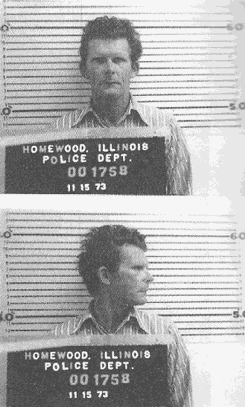
On November 13, the FBI began the process of obtaining a warrant for "interstate flight to avoid prosecution." The following day, they received information indicating that Norman was returning from his trip. Surveillance was established at Rehling's apartment, leading to Norman's arrest. He was charged with eight counts of indecent liberties with a child and eight counts of contributing to the delinquency of a minor. His bond was set at $325,000, and he was sent to Cook County Jail to await his trial.
John David Norman
Source: Homewood, Illinois Police Department
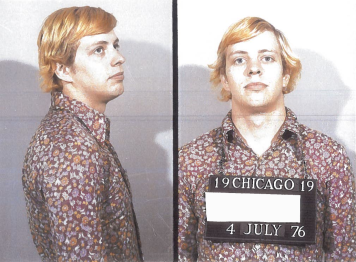
Norman wasted no time starting his next venture, the Delta Project. He gained access to a jail printing press and sent out three newsletters called "Hermes," straight from jail. In these newsletters, he mentioned his new right-hand man, Phillip Paske, and pleaded with his patrons for bail money. Phillip Paske was a 25-year-old incarcerated for his role as the driver of a getaway car in a robbery that resulted in a killing. He grew close to Norman during their time together in jail. Norman claimed that the Delta Project provided educational, travel, and self-development opportunities for qualified young men of character and integrity.
Phillip Paske
Source: Chicago Police Department
In "Hermes," Norman also stated that "Delta-Dorms" were being established across the U.S., with each dorm housing two to four "cadets" overseen by a "don." However, police alleged that the "cadets" were underage male prostitutes recruited in Chicago, and the "dons" were pedophiles. An unknown benefactor from California posted $36,000 bail for Norman in the spring of 1976. Paske was released on probation in July 1976, with funding coming from a client of the Delta Project. After their release, Norman and Paske moved in together at 6851 West Wrightwood Ave and shared a mailbox at P.O. Box 5094 in Chicago. Paske reported on his probation record that he was earning $3 an hour working for Norman.
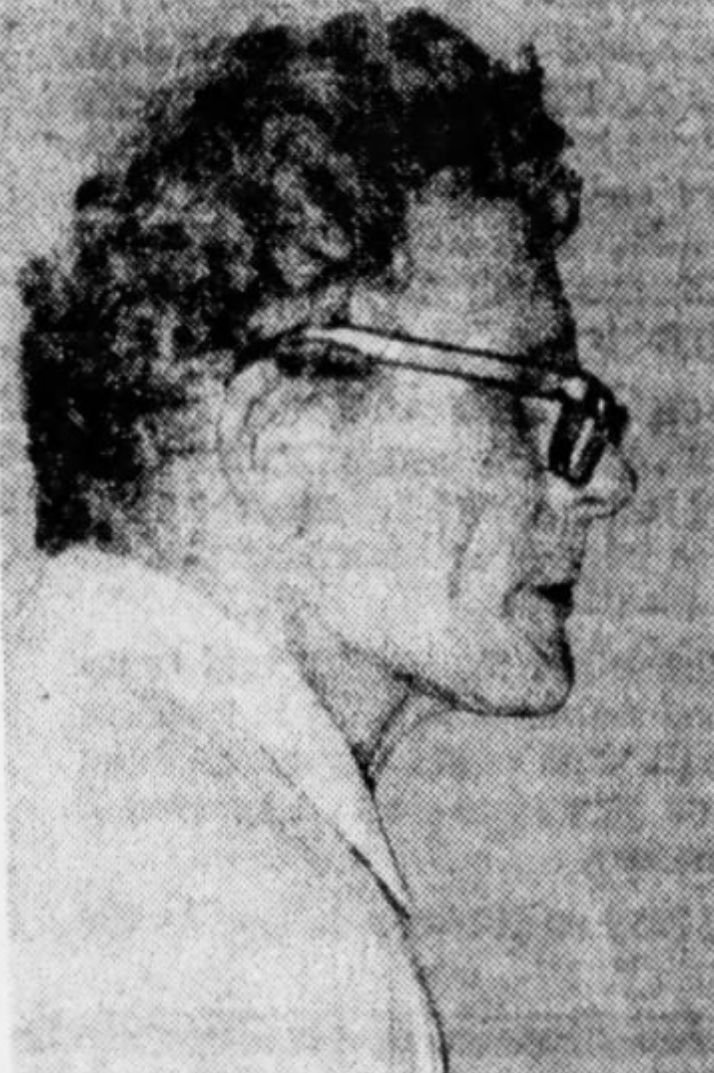
On November 30, 1976, Norman's trial took place, and he was found guilty on eight counts of indecent liberties with a child. He was sentenced to four years in prison at Pontiac Correctional Center. While Norman was incarcerated, Phillip Paske continued to operate the Delta Project. Police reported that the newsletter had 5,000 subscribers and grossed over $300,000 per year. Norman was paroled in 1977 under the condition that he stay away from boys under the age of 18. However, in June 1977, he was arrested again for engaging in sexual activities with a 16-year-old and a 17-year-old boy from the Illinois Department of Children and Family Services foster home, in addition to taking pornographic pictures of them. Investigators discovered that Norman had rebooted the Delta Project under new names: Creative Corporations and M-C Publications, with "MC" standing for male call. One of the boys informed detectives that Norman was in the process of selling him to a client in Canada and that they were just waiting for the plane ticket.
Norman's apartment on West Wrightwood Ave was raided, and investigators obtained 20,000 index cards containing clients' sexual preferences for young boys. Interestingly, Paske was present in the apartment during Norman's arrest but was not arrested himself. In July 1977, Paske was working as a children's supervisor at a fire department swimming pool, but he was fired once news of his relationship with Norman became public. Incredibly, the index cards containing incriminating evidence against Norman were destroyed—again. It's baffling because Sgt. Ronald Kelly, head of the child porn unit at the Chicago Police Department, stated in a 1978 article that investigators "intend to go through the whole file and find out just who subscribes to child sex publications."
John David Norman
Source: Chicago Tribune
On February 28, 1979, three teenage boys had been found murdered in a car parked in an alley in Chicago on February 25, 1979. They had been stabbed multiple times, and their throats cut in a "ritualistic fashion." The victims were identified as Frank Mussa, 16, Michael Salcido, 17, and Arthur Salcido, 19. It was suspected that their bodies were placed in the car after their deaths, as very little blood was found inside. Michael was scheduled to testify at John Norman's upcoming trial, which connected this case to an earlier unsolved homicide.
On January 20, 1977, 17-year-old Kenneth Hellstrom was murdered in Homewood, Illinois. He had been stabbed six times in the back on his way home from work. He staggered home through the snow and died in his mother's arms. Kenny had previously been one of the boys Norman assaulted in 1973 and was a key witness in Norman's child molestation charge. All his parents knew was that the murder must have been personal, as Kenny had $250 still in his back pocket. Though Norman was in prison the night Kenny was murdered, Phillip Paske was out on probation. Police wanted to question Paske about his possible involvement and connection to these crimes.
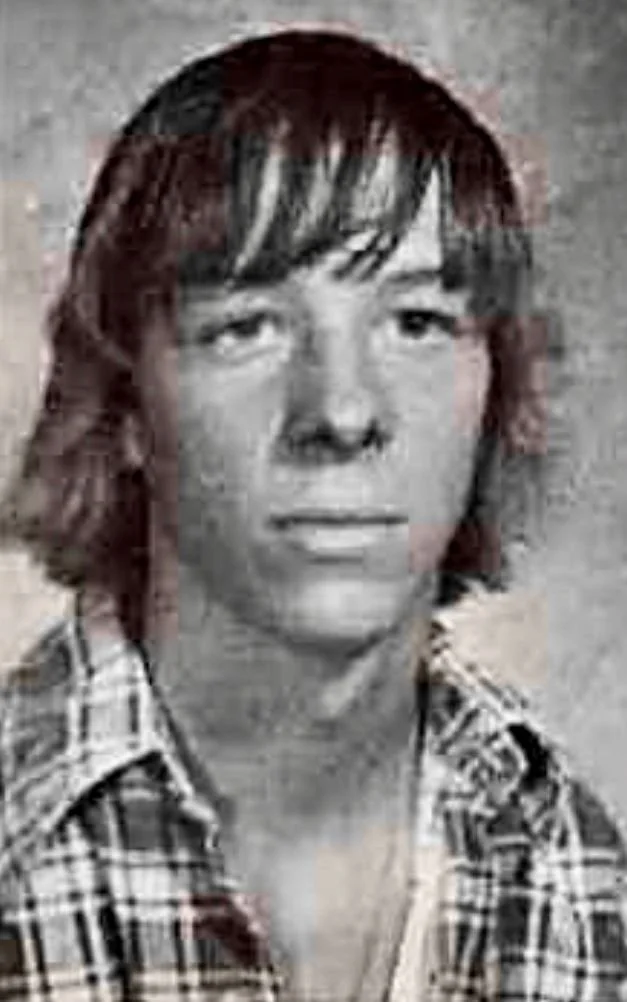
Kenneth Jay Hellstrom Jr.
Source: Find a Grave
Handy Andy
Finding information about John from 1978 to 1982 is challenging, possibly due to a more pressing story dominating the headlines in Cook County: John Wayne Gacy. Gacy emerged as one of the most notorious serial killers in American history. The entire world was shocked when his victims, boys aged 14 to 21—were discovered beneath the crawl space of his home. Law enforcement resources were consumed by the overwhelming task of identifying 32 bodies. I will return to Gacy later.
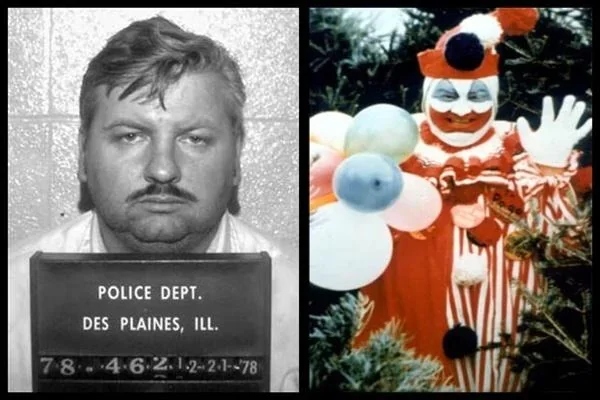
John Wayne Gacy
Source: Chicago Tribune
The next time John David Norman appears in records is for soliciting a child for prostitution on February 2, 1982, when he was arrested by the Denver Police. Shortly thereafter, police apprehended Norman again for producing a child pornography magazine called "Handy Andy" between October 1983 and May 1984 from his home in Aspers, Pennsylvania. He exploited at least 20 young boys in the area, many of whom came from the Adams County Children's Shelter. He lured them with drugs and alcohol, then photographed them engaging in various sexual acts.
On May 31, 1984, when police raided his home, Norman jumped out of his third-floor apartment window, spraining his back and breaking his ankle. Despite this, he managed to flee Pennsylvania. He was captured in Bolingbrook, Illinois, in October 1984 and released on $7,000 bail in March 1985, only to flee again. Norman was eventually recaptured in Urbana, Illinois, on July 29, 1987, and received a six-year sentence for crimes committed in Illinois. He was extradited to Pennsylvania and sentenced to 18 to 36 months for distributing "Handy Andy." A report from 1986 indicated that Norman was wanted in five different states for sex crimes.
On July 10, 1988, John David Norman was arrested and convicted of child molestation. He faced another conviction on April 30, 1990, this time in Colorado. He used several aliases, one of which involved simply substituting his middle name with John Paul Norman. Other names he was known by included Patrick Nelson, Doug White, Clarence Eugene McKay, Charles McKay, and John McKay. In 1995 and 1998, Norman was convicted in California for distributing child pornography. He was released from prison in 1999 and subsequently declared a sexually violent predator. As a result, he was detained at Atascadero State Hospital.
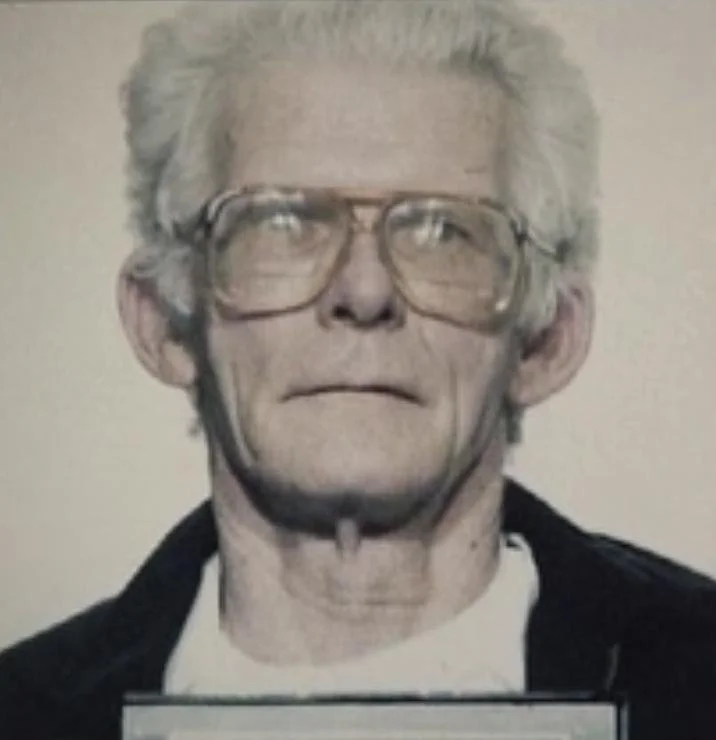
John David Norman
Source: IMDb
Norman was recommitted as a sexually violent predator in 2001, 2003, and 2005. In 2007, after revisions to the Sexual Violent Predator Act, he was recommitted for an indeterminate term. In October 2008, a judge ruled that he should be released to a home in a rural desert community near the Mexican border. The judge stated that Norman should be reintegrated into society after spending six years in an inpatient treatment program. Under Jessica's Law, state officials are required to place sexually violent predators in rural areas, away from facilities frequented by children.
Where are they now?
On November 7, 2008, Norman, was placed in a residence in Boulevard, Colorado, a small community located about 70 miles east of downtown San Diego, despite opposition from residents who did not want 81-year-old Norman living in their vicinity. He was supervised 24 hours a day, seven days a week. A security guard lived with him and drove him to therapy sessions, appointments, and errands in the community. Additionally, a member of a safety team contacted him by phone at least once a day and visited him at home at least once a week. As part of his weekly outpatient therapy, Norman attended 11 individual and 11 group therapy sessions with Dr. James Reavis, a psychologist and specialized sex offender treatment provider. He also had 10- to 15-minute visits at the Gay and Lesbian Community Center in San Diego once a week, usually scheduled before or between his therapy sessions.
However, Norman violated his parole on February 2, 2009. He slipped a suggestive note with his contact information to a 19-year-old grocery bagger in El Centro and placed an advertisement in the Gay & Lesbian Times that read: "Unique old guy … needs a younger guy as a roommate and companion … is more interested in company than sex … pay little or nothing for room and board." He committed several other violations, such as contacting other known sex offenders and possessing child pornography. Norman testified that he reached out to the clerk and sought a roommate because he felt isolated and desperate for conversation beyond what he received from his treatment or security staff. In March 2009, Norman was ordered back into state custody at Coalinga State Hospital, where he died on May 22, 2011.
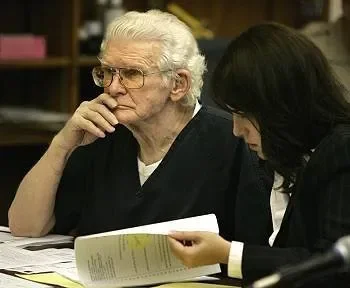
John Norman at 81 years old
Source: San Diego Union-Tribune
After Phillip Paske and John Norman parted ways, Paske began searching for another job. He had been publicly outed in the local media for his involvement in a national porn ring. He was far from being Cook County's most wanted civilian. His friend, David Cram, helped him find employment. Cram's father had previously been involved in burglaries with Paske. Cram worked for PDM Contractors, a construction company owned by a local Chicago man, John Wayne Gacy. While Cram was aware of Paske’s legal troubles, Gacy reportedly appeared accommodating and unconcerned. Paske first appeared on Gacy's payroll at PDM Contractors in September 1978.
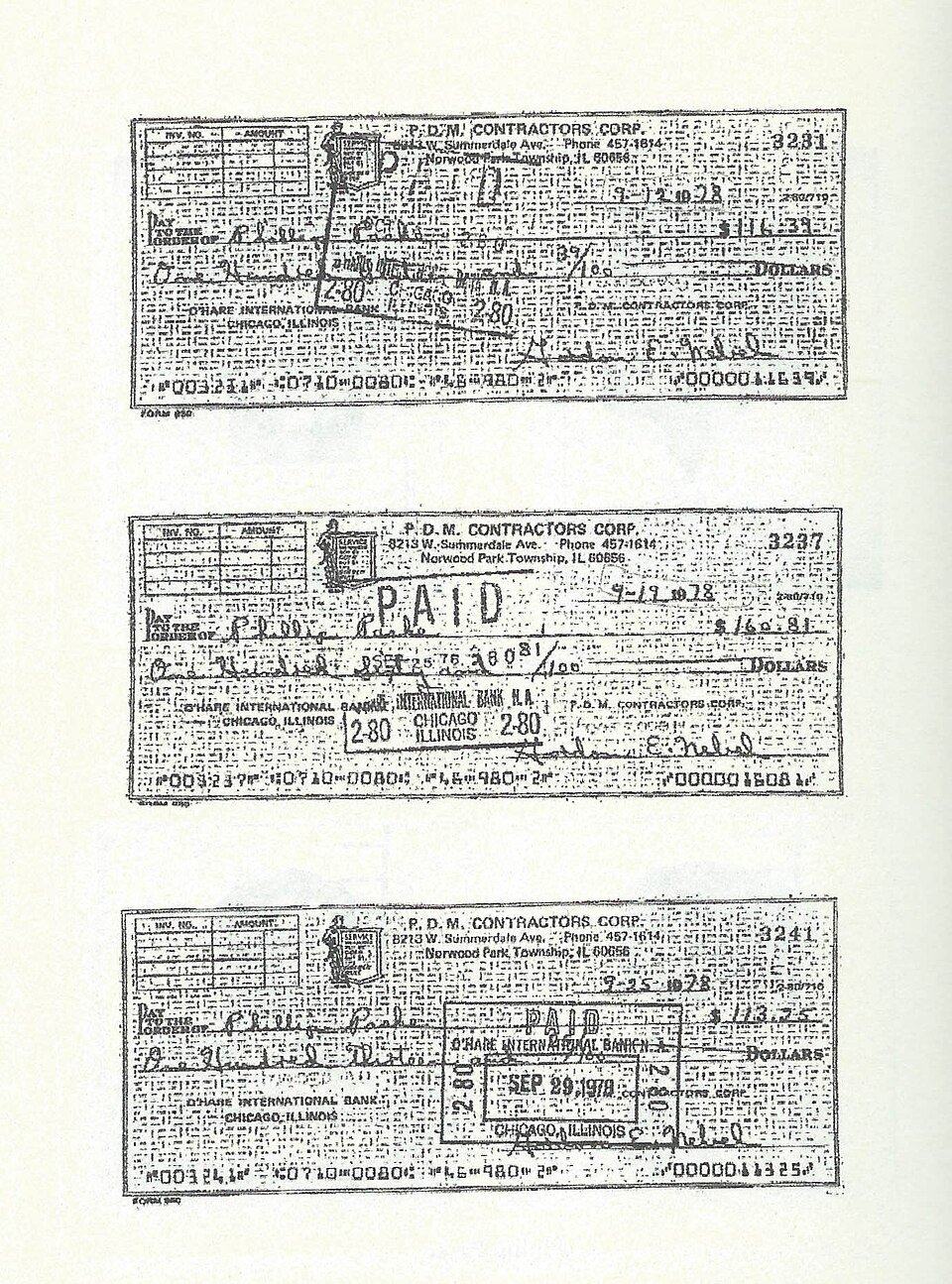
Pay stubs from Paske's employment under Gacy, September 1978
Source: FBI vault
Following Gacy's arrest on December 21, 1978, he repeatedly denied any involvement in the 32 murders attributed to him. Records indicate that David Cram, Phillip Paske, and Michael Rossi, all employees of Gacy’s, had keys to his house at 8213 W. Summerdale Avenue. Gacy claimed they had murdered the boys. Gacy was a meticulous record keeper, and in 2012, two lawyers revealed that a travel checkbook indicated Gacy had been in another state during the time of at least three murders. The challenge is that record-keeping for missing children in the 1970s was inadequate. A rule required a 72-hour waiting period before conducting a search, raising questions about the accuracy of those records. Also, how can we trust anything Gacy says as the complete truth? He is known as one of the greatest con men in U.S. history. While it was confirmed that Cram and Rossi participated in digging some of the trenches under the crawl space, investigators believe they were not involved in the murders.
At least two victims believed to have been murdered by John Wayne Gacy are Kenneth Parker, 16, and Michael Marino, 14. They were last seen alive at Clarke Street and Diversey Avenue, an area known for its LGBTQ+ community. The boys went missing on October 24, 1976. At that time, Phillip Paske and John Norman lived at 707 West Wrightwood, located less than a block away from where the boys disappeared. In 1992, investigator Randy White conducted one of many interviews with Gacy before his execution on May 10, 1994. White mentioned that detectives were looking into Paske regarding the murder of Kenny Hellstrom and three boys killed in 1979. When asked whether he thought Paske might have been involved, Gacy stated that Paske had worked for him for only a brief period but he was close with Cram. Cram had once told Gacy that if he wanted more male friends, Paske could provide them.
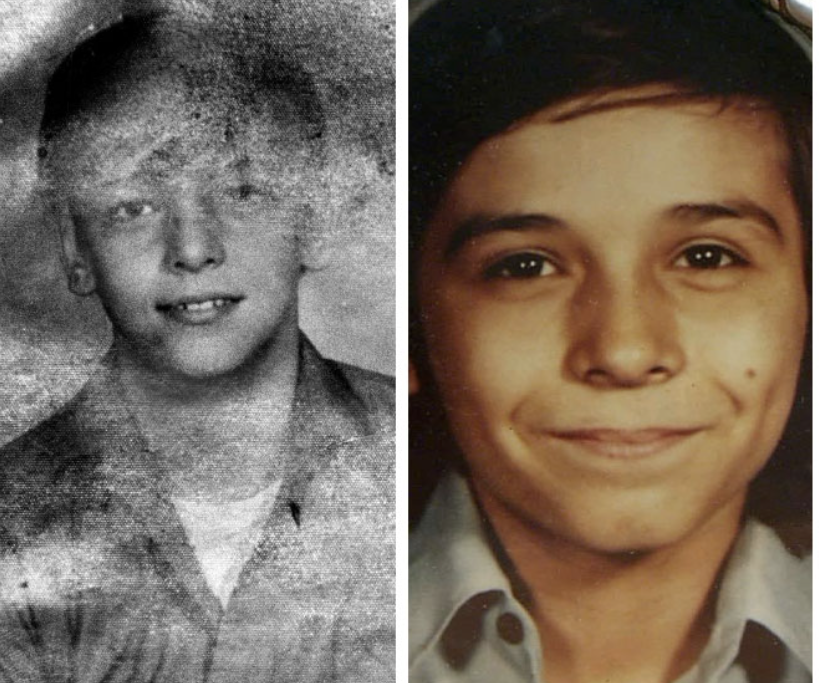
Kenneth Parker and Michael Marino
Source: Chicago Tribune
In this interview, Gacy also mentioned John Norman, demonstrating his awareness of Norman's extensive arrest record, numerous aliases, and claims that Norman made snuff films. Gacy suggested investigators review these films to see if any boys he had killed appeared in them. When White inquired whether Gacy had ever met Norman, he responded cautiously, stating, "I have yet to see a current picture of him, so he would have to say no." Gacy has always been known for choosing his words very carefully.
In 1992, investigators revealed that the three teenagers slain in 1979 were victims of gang-related violence perpetrated by the Latin Kings and had no relation to Norman or Paske. In June 2012, a man named Fred Rogers was convicted of the murder of Kenny Hellstrom and sentenced to 22 years in prison. Rogers, who was 16 at the time of the incident, had argued with Kenny earlier on the day he was stabbed. Phillip Paske passed away on November 9, 1998, in Chicago due to AIDS-related complications.
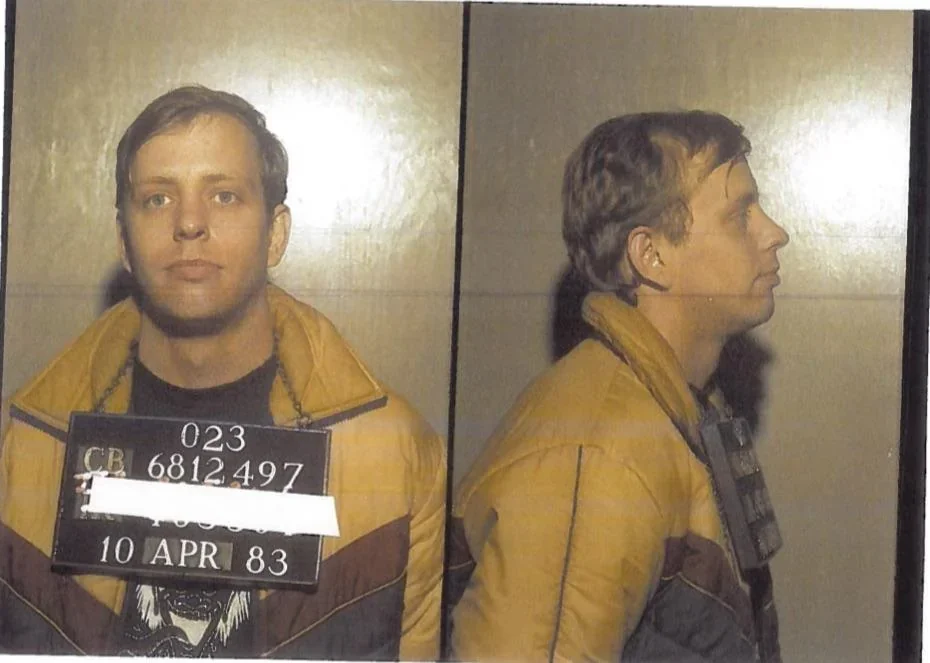
Phillip Paske
Source: Cavdef
I find it impossible to dismiss the fact that one man appears linked to two of the most notorious serial killers of young boys in American history. The frequent overlap in characters, locations, and associations raises uncomfortable questions about whether figures like Corll and Gacy were truly isolated monsters or part of an organized nationwide network. Randy White shared this belief and wrote a letter to John David Norman, asking if he had any connection to the Houston Mass Murders. Norman, eager for attention and keen to boast about his actions, quickly responded to White. In a letter dated April 1994, Norman claimed, "the whole thing was a flight of fancy invented to make a big story out of my arrest. What scared everyone was the rumors about the high-ups on the list, and there very well could have been, but it was without my knowledge."
White maintained contact with Norman from 1994 to 1995. At one point, Norman attempted to persuade White to join him as his right-hand man in San Diego for another child pornography operation. White described Norman as the worst pedophile he had ever encountered, someone devoid of remorse for his actions. White never asked Norman if he was involved with Gacy; he claimed he didn't want to scare him off. It is deeply frustrating that there is no reliable way to fully determine whether Norman personally knew John Wayne Gacy or Dean Corll. The destruction of the index cards eliminated what may have been the most critical evidence capable of confirming those connections—or of identifying additional victims whose names were never recovered. Some answers, it seems, were erased long before the questions could ever be fully asked.
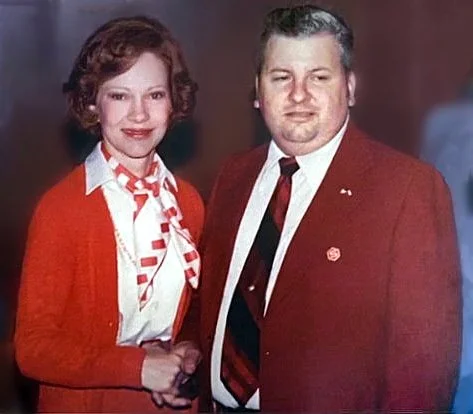
John Wayne Gacy with first lady Rosalynn Carter in 1978
Source: Chicago Tribune
Sources
Bynon, Jacqueline . "The Clown and the Candyman." Investigation Discovey, 15 Dec. 2020, podcasts.apple.com/gb/podcast/the-clown-and-the-candyman/id1540131474.
John Wayne Gacy: Devil in Disguise (TV Mini Series). NBC News Studios. 25 Mar. 2021.
https://www.newspapers.com/article/the-desert-sun-john-david-norman-startin/47414904/
https://www.phantomranch.net/hofc/drsb.htm
https://medium.com/@tracy_ullman/the-largest-sex-trafficking-ring-you-never-knew-about-but-should-have-0cce22addc1e
https://web.archive.org/web/20221025073628/https://casetext.com/case/people-v-norman-212
https://cavdef.org/w/index.php?title=John_Norman
https://en.wikipedia.org/wiki/John_David_Norman
https://en.wikipedia.org/wiki/Phillip_Paske
https://drive.google.com/file/d/1L4Mo4LLBDdAcbL20lIK3SkkvcamHNjFI/view
https://thehotstar.net/finders_odyssey.html
https://thehotstar.net/deltaproject_hermes.html
https://vault.fbi.gov/philip-paske/Philip%20Paske%20Part%2001%20%28Final%29
https://www.oxygen.com/true-crime-buzz/was-john-norman-connected-to-serial-killer-john-wayne-gacy
https://www.sandiegouniontribune.com/2009/03/11/east-county-sex-offender-81-returned-to-state-hospital/
https://www.newspapers.com/article/chicago-tribune-john-norman-dallas-raid/185371144/
https://www.newspapers.com/article/the-houston-chronicle-john-norman-radio/185369719/
https://www.newspapers.com/article/the-ada-evening-news-john-david-norman-1/185370058/
https://www.newspapers.com/article/the-houston-post-john-norman-1951-jingle/185374705/
https://www.newspapers.com/article/chicago-tribune-john-norman-dallas-raid/185371032/
https://www.newspapers.com/article/the-houston-post-john-norman-1973-releas/185374895/
https://www.newspapers.com/article/anaheim-bulletin-jdn-1960-arrest/185375567/
https://www.newspapers.com/article/anaheim-bulletin-jdn-1960-arrest/185375615/
https://www.newspapers.com/article/chicago-tribune-jdn-1978-arrest/185431890/?_gl=1*1l8b9ew*_up*MQ..&gclid=Cj0KCQiAnJHMBhDAARIsABr7b85pyPG4hfEsUXBXl12WpyVzMzVhp8gvMKURxe3t-byRUeqTj1M_pR0aAmraEALw_wcB&gclsrc=aw.ds&gbraid=0AAAAADtl_1B-TadV6lrzfuVw3E2CL_f4Z
https://www.newspapers.com/article/chicago-tribune-john-norman-phillip-pask/185431539/?_gl=1*mdjeg9*_up*MQ..&gclid=Cj0KCQiAnJHMBhDAARIsABr7b85pyPG4hfEsUXBXl12WpyVzMzVhp8gvMKURxe3t-byRUeqTj1M_pR0aAmraEALw_wcB&gclsrc=aw.ds&gbraid=0AAAAADtl_1B-TadV6lrzfuVw3E2CL_f4Z
https://www.newspapers.com/article/the-gettysburg-times-handy-andy/185433597/
https://www.newspapers.com/image/46864287/?clipping_id=185430542&fcfToken=eyJhbGciOiJFUzI1NiIsInR5cCI6IkpXVCJ9.eyJmcmVlLXZpZXctaWQiOjQ2ODY0Mjg3LCJpYXQiOjE3NzAzMjYyOTUsImV4cCI6MTc3MDQxMjY5NX0.-hAcBrGj3yJhuVLTY1x085I2dkduHr0olWXQDjulxG-mlP5EGLX8aweVwTBNKDRjPPGaA3RIwcqMFD2oTLJQaQ
https://www.chicagotribune.com/1992/02/07/jury-told-of-1979-triple-gang-slaying/
https://www.nbcchicago.com/news/local/fred-rogers-homewood-homicide/1929089/